
AI features that survive contact with users.
We integrate language models into real product flows — grounded in your data, bounded by guardrails, and measured with evaluations rather than demos.
- LLM features
- RAG pipelines
- Evaluation
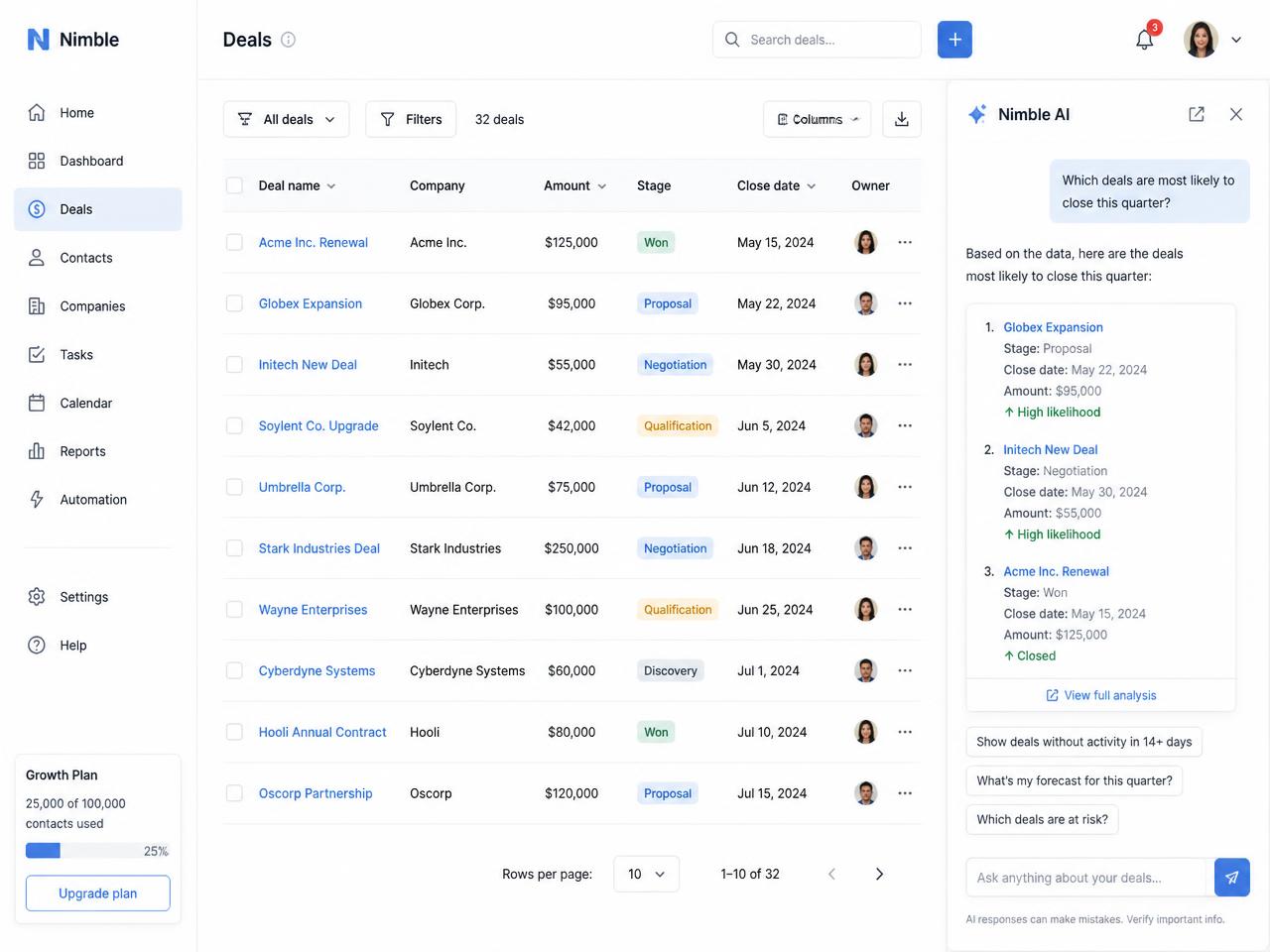
Large language models embedded into your product with guardrails and evaluation.
The model is the easy part.
Choosing a model takes an afternoon. Retrieval quality, prompt versioning, cost ceilings, fallbacks and evaluation are what decide whether the feature is usable in production.
Why it matters
Most AI projects stall because the model was chosen before the problem was defined. We start from the workflow and the measurable outcome, then integrate the smallest thing that works.
What we build
Assistants and copilots inside existing products, retrieval over your own documents, classification and extraction pipelines, and safe model routing.
Who it is for
Product teams adding intelligent features, support organisations drowning in repetitive tickets, and companies with large internal knowledge bases.
What we handle from strategy to delivery.
Six areas we take responsibility for on ai integration engagements — no handoff gaps between them.
- 01
AI opportunity mapping
Which workflows justify AI and which need better software instead.
- 02
Data & retrieval design
Chunking, embeddings, vector storage and grounding strategy.
- 03
Model & API integration
Provider selection, routing, fallbacks and cost controls.
- 04
Product surface design
Interfaces that expose uncertainty and keep humans in control.
- 05
Evaluation & guardrails
Test sets, scoring, prompt regression checks and abuse protection.
- 06
Production monitoring
Latency, spend, quality drift and feedback capture.
Standards we hold every ai integration project to.
- Grounded answers
- Retrieval over your own data
- Cost controlled
- Routing, caching and budgets
- Evaluated
- Scored against real test sets
- Human in the loop
- Review where accuracy matters
From first conversation to a product that is ready to grow.
01 — Discover
We map the workflow, the data available and the measurable outcome AI is supposed to improve.
We review requirements, existing analytics, competitors and user needs to understand where ai integration will create the most value. Nothing is proposed before the problem is clear.
Deliverables
- Use-case assessment
- Data inventory
- Success metrics
Typical activities
- Workflow interviews
- Data review
- Feasibility check
Success criteria
A clear, shared understanding of the problem, scope and expected outcome.
02 — Define
We decide what should be deterministic software and what genuinely benefits from a model.
We turn research into a clear product direction, priorities and information architecture. Scope, sequencing and technical direction are agreed in writing before work starts.
Deliverables
- Solution design
- Evaluation criteria
- Cost model
Typical activities
- Architecture design
- Provider comparison
- Risk assessment
Success criteria
Everyone understands what is being built, in what order, and why.
03 — Design
We design the product surface so people can understand, correct and trust the output.
We translate the agreed structure into a polished, responsive interface — every state, breakpoint and edge case included, reviewed together as we go.
Deliverables
- Interaction design
- Review and override flows
- Prompt or model spec
Typical activities
- Flow design
- Guardrail definition
- Stakeholder review
Success criteria
The experience is validated and ready for implementation.
04 — Build
We implement the pipeline, integrations and interfaces with cost and latency treated as requirements.
We turn approved designs into production-ready software using maintainable components and a scalable architecture. You see working software throughout, not just at the end.
Deliverables
- Working pipeline
- System integrations
- Guardrails
Typical activities
- Development
- Prompt or model iteration
- Integration testing
Success criteria
The product works reliably across the required devices and scenarios.
05 — Validate
We score the system against a real evaluation set instead of relying on impressions.
We test the product against the real requirements, profile performance and surface issues before launch rather than after it.
Deliverables
- Evaluation results
- Regression test set
- Accuracy baseline
Typical activities
- Test-set construction
- Scoring runs
- Failure analysis
Success criteria
Critical issues are resolved and the product is ready for launch.
06 — Launch
We release with monitoring for quality, spend and drift, then iterate on real usage.
We deploy, review the built product in production and refine the details that only appear in the real thing. Monitoring and handover happen at the same time.
Deliverables
- Production deployment
- Monitoring dashboards
- Feedback capture
Typical activities
- Rollout
- Cost tuning
- Continuous evaluation
Success criteria
The product is live, verified, documented and ready for users.
Everything handed over, nothing locked away.
Concrete output at the end of a ai integration engagement — code, assets and documentation you own.
The stack we reach for first.
Chosen per project constraints — this is the starting point, not a rule.
Frontend
- TypeScript
Backend
- Python
Data
- pgvector
AI
- OpenAI
- Anthropic
- LangChain
AI products that do real work.
Selected projects built with the same approach, team and standards.

AI Background Remover SaaS
SmartBG Remover
A subscription SaaS that removes image backgrounds in seconds, with batch processing and an API for developers.
- Next.js
- Python
- AWS
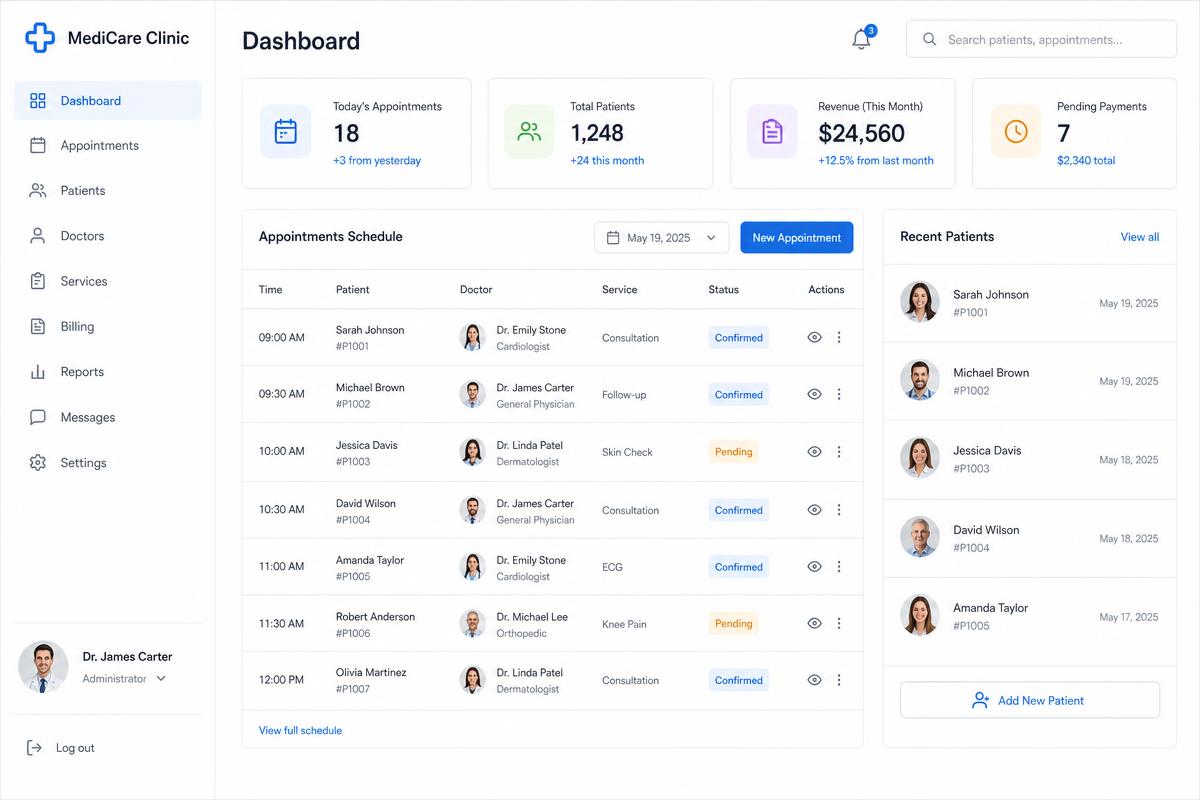
Doctor's Management System
Pocket MD
A clinic management system covering appointments, patient records, prescriptions and billing in one workspace.
View project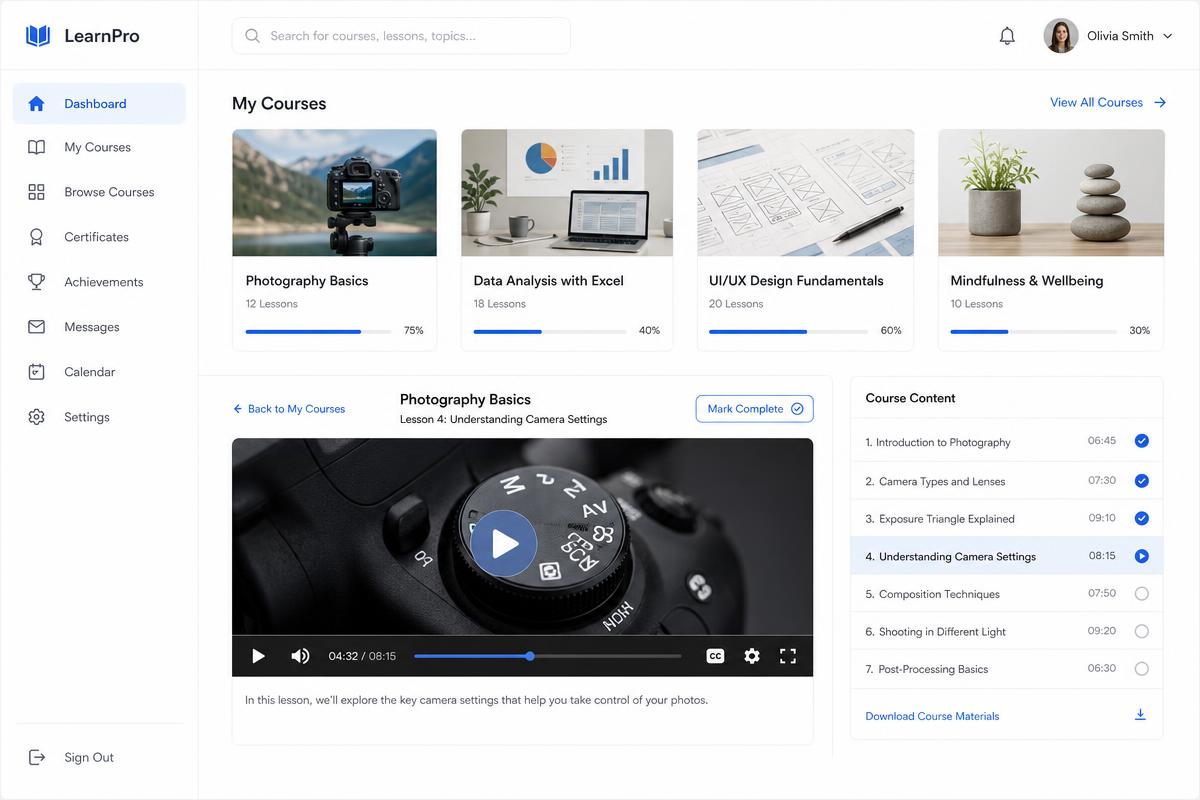
Online Learning Solution
E-Learning Platform
A course platform with video lessons, progress tracking, assessments and instructor analytics.
View projectOutcomes, not just output.
Clients stay because the work reduces risk and cost after launch, not only because it looks good at handover.
- 01
Less rework
A scored evaluation set stops opinion-driven prompt churn.
- 02
Faster decisions
A working prototype answers the feasibility question in weeks.
- 03
Better performance
Latency and spend treated as product requirements.
- 04
Clear handoff
Documented prompts, evals and provider configuration.
- 05
Long-term thinking
Provider-agnostic architecture as models change.
Questions we get asked.
Still unsure about something on ai integration? Ask us directly — we answer honestly, even when the answer is no.
No. We use enterprise API endpoints with training disabled and keep your data inside your infrastructure wherever possible.
Retrieval grounding, structured outputs, refusal paths and evaluation sets that catch regressions before release.
We benchmark two or three candidates against your own evaluation set and choose on quality, latency and cost.
Primarily OpenAI, Anthropic and open models, behind an abstraction so providers can be swapped.
By grounding responses in retrieved sources, constraining outputs and surfacing citations plus confidence.
No. We use enterprise endpoints with training disabled and keep data handling documented.
Model routing, caching, prompt trimming and hard spend budgets with alerting.
Often delivered together.
AI Automation
Document, support and back-office workflows automated with human review built in.
View serviceAI/ML Solutions
Custom models for prediction, scoring and recommendation, deployed and monitored.
View serviceAPI Development
Versioned, documented APIs and webhooks that other teams can build against.
View service
Ready to build something better?
Tell us what you are trying to build. We'll help you figure out the right next step — scope, sequence and what it realistically takes.
Have a project in mind?
Let’s build something amazing together.
Stay in the loop.
Get useful insights on technology, digital products, AI and web development delivered to your inbox.