
Test the idea before you fund the build.
In two to three weeks we turn a concept into something people can click through — enough to test with users, show investors, or settle an internal debate.
- Rapid concepts
- Clickable demos
- Validation
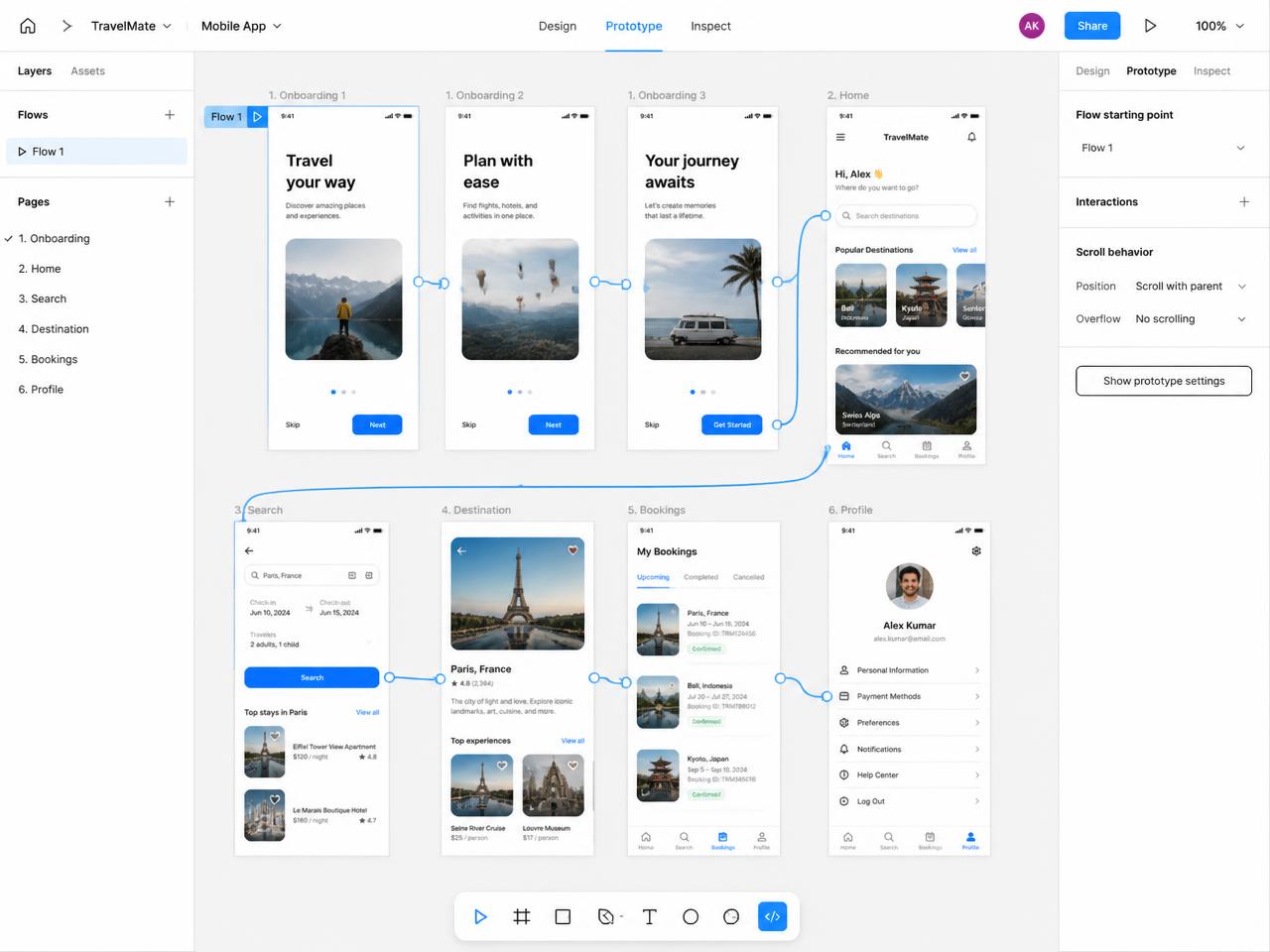
Clickable and coded prototypes that test an idea before committing a build budget.
Cheap answers to expensive questions.
A prototype is the fastest way to discover that a flow is confusing or that a feature nobody asked for is eating the roadmap.
Why it matters
Opinions are cheap and builds are expensive. A prototype turns a debate into evidence within days.
What we build
Clickable prototypes, realistic data mock-ups, code prototypes for interaction-heavy ideas, concept tests and investor-ready demos.
Who it is for
Founders validating an idea, teams choosing between directions, and product owners preparing a funding or stakeholder decision.
What we handle from strategy to delivery.
Six areas we take responsibility for on prototyping engagements — no handoff gaps between them.
- 01
Concept definition
The riskiest assumption and what evidence would settle it.
- 02
Rapid interface design
Enough fidelity to test, not more.
- 03
Interactive prototyping
Realistic flows, transitions and data.
- 04
Code prototypes
Working front-ends when interaction fidelity matters.
- 05
User validation
Task-based sessions with target users.
- 06
Findings & roadmap
What to build, what to drop, what to test next.
Standards we hold every prototyping project to.
- Days, not months
- Evidence early
- Realistic interaction
- Testable flows
- Decision ready
- Findings, not opinions
- Reusable output
- Feeds the real build
From first conversation to a product that is ready to grow.
01 — Discover
We learn the users, the business goals and where the current experience breaks down.
We review requirements, existing analytics, competitors and user needs to understand where prototyping will create the most value. Nothing is proposed before the problem is clear.
Deliverables
- Research findings
- Problem statement
- Success metrics
Typical activities
- User interviews
- Analytics and support review
- Competitive audit
Success criteria
A clear, shared understanding of the problem, scope and expected outcome.
02 — Define
We structure the product around real journeys before any visual decisions are made.
We turn research into a clear product direction, priorities and information architecture. Scope, sequencing and technical direction are agreed in writing before work starts.
Deliverables
- User flows
- Information architecture
- Priority list
Typical activities
- Journey mapping
- Content structuring
- Scope agreement
Success criteria
Everyone understands what is being built, in what order, and why.
03 — Design
We move from low-fidelity structure to high-fidelity interfaces with every state considered.
We translate the agreed structure into a polished, responsive interface — every state, breakpoint and edge case included, reviewed together as we go.
Deliverables
- Wireframes
- High-fidelity screens
- Component library
Typical activities
- Wireframing
- Visual design
- Design critique
Success criteria
The experience is validated and ready for implementation.
04 — Build
We produce interactive prototypes and the specifications engineering needs to implement accurately.
We turn approved designs into production-ready software using maintainable components and a scalable architecture. You see working software throughout, not just at the end.
Deliverables
- Clickable prototype
- Specs and tokens
- Asset export
Typical activities
- Prototyping
- Handoff preparation
- Developer walkthrough
Success criteria
The product works reliably across the required devices and scenarios.
05 — Validate
We test the design with target users and revise based on observed behaviour, not preference.
We test the product against the real requirements, profile performance and surface issues before launch rather than after it.
Deliverables
- Usability findings
- Prioritised revisions
- Updated screens
Typical activities
- Task-based testing
- Synthesis
- Iteration
Success criteria
Critical issues are resolved and the product is ready for launch.
06 — Launch
We support implementation, review the built product and refine the details that only appear in code.
We deploy, review the built product in production and refine the details that only appear in the real thing. Monitoring and handover happen at the same time.
Deliverables
- Design QA report
- Final component set
- Documentation
Typical activities
- Implementation review
- Design QA
- Ongoing support
Success criteria
The product is live, verified, documented and ready for users.
Everything handed over, nothing locked away.
Concrete output at the end of a prototyping engagement — code, assets and documentation you own.
The stack we reach for first.
Chosen per project constraints — this is the starting point, not a rule.
Frontend
- React
- Vite
Design
- Figma
- Framer
- Maze
Backend
- Mock Service Worker
Interfaces designed with intent.
Selected projects built with the same approach, team and standards.
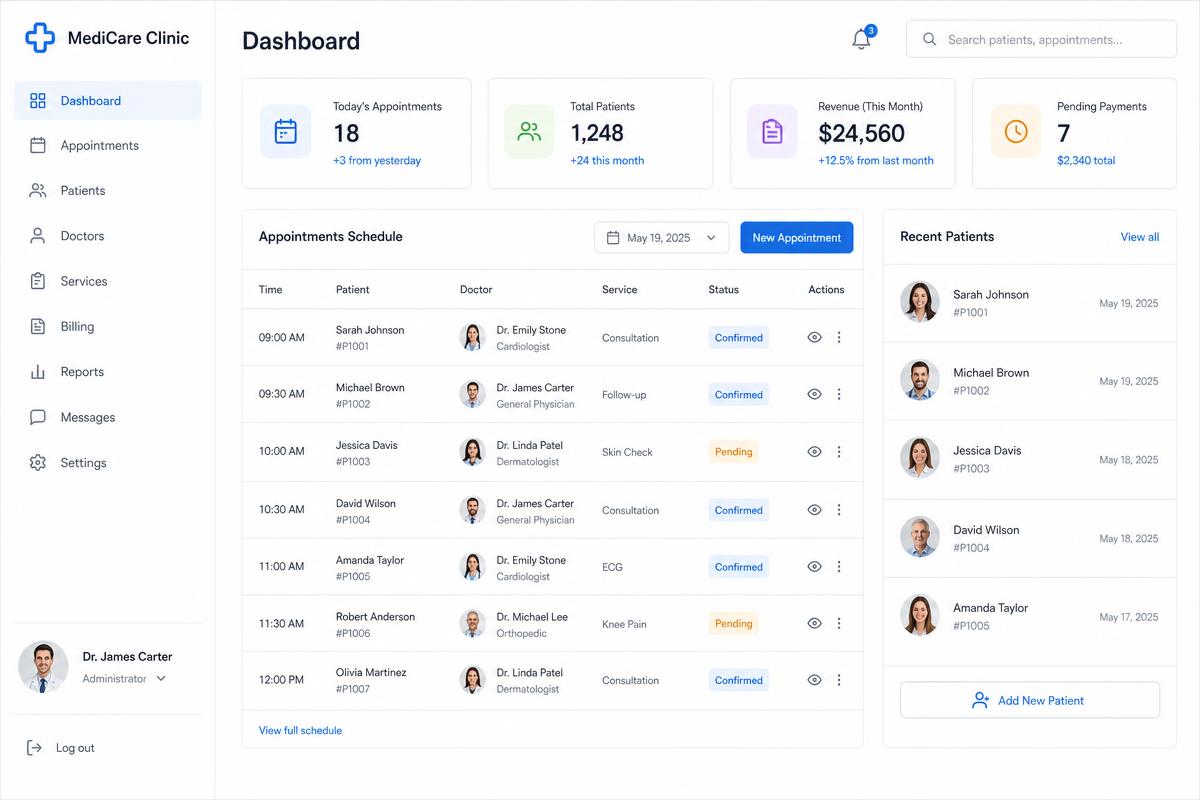
Doctor's Management System
Pocket MD
A clinic management system covering appointments, patient records, prescriptions and billing in one workspace.
- React
- Node.js
- MongoDB
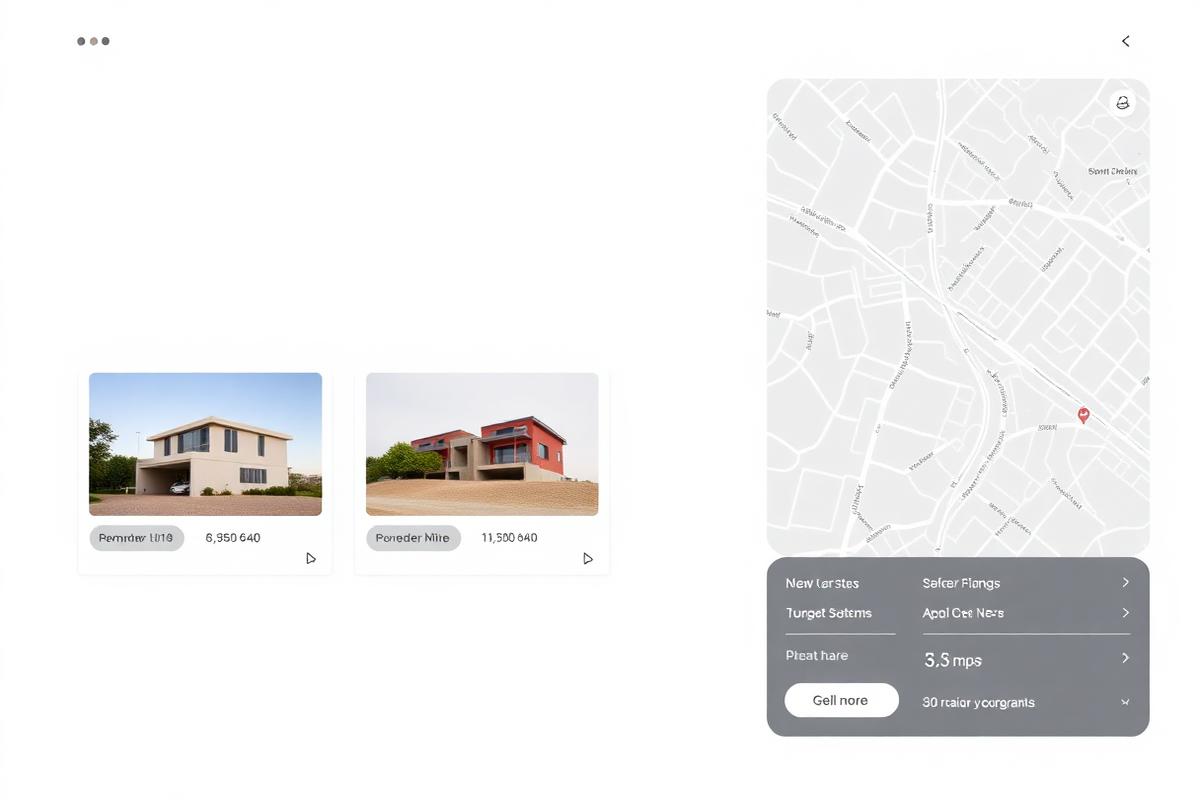
Property Listing Platform
Real Estate Platform
A property marketplace with map-based search, saved listings and an agent dashboard for lead management.
View project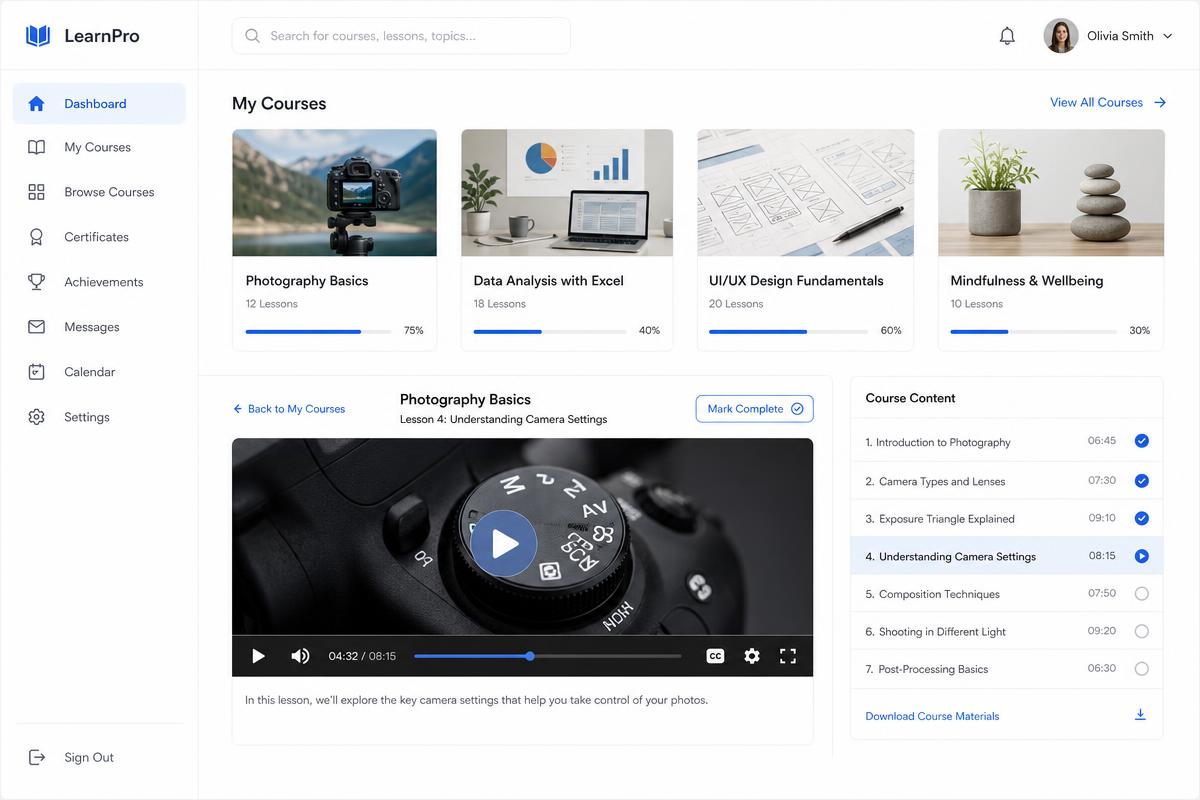
Online Learning Solution
E-Learning Platform
A course platform with video lessons, progress tracking, assessments and instructor analytics.
View projectOutcomes, not just output.
Clients stay because the work reduces risk and cost after launch, not only because it looks good at handover.
- 01
Less rework
Failed ideas fail on a prototype instead of in production.
- 02
Faster decisions
Stakeholders align around something they can click.
- 03
Better performance
Interaction problems surface before engineering.
- 04
Clear handoff
Findings and assets carry straight into the build.
- 05
Long-term thinking
A validated direction before committing budget.
Questions we get asked.
Still unsure about something on prototyping? Ask us directly — we answer honestly, even when the answer is no.
Typically two to three weeks from kickoff to tested prototype.
Coded prototypes reuse the design system, so parts carry forward — but we rebuild the data layer properly for production.
Yes, with your customers where possible or recruited participants matching your audience.
The design and structure usually carry into the product; the prototype plumbing does not.
Yes. We recruit against your target profile, run task-based sessions and report prioritised findings.
Yes. Investor demos are a common use, with realistic content and a scripted flow.
Often delivered together.
Product Design
Interface and interaction design grounded in real user tasks and business goals.
View serviceDesign Systems
Token-driven component libraries that keep design and code in agreement.
View serviceSaaS Products
End-to-end SaaS builds from first version to a product with paying customers.
View service
Ready to build something better?
Tell us what you are trying to build. We'll help you figure out the right next step — scope, sequence and what it realistically takes.
Have a project in mind?
Let’s build something amazing together.
Stay in the loop.
Get useful insights on technology, digital products, AI and web development delivered to your inbox.